My Experience With A ReEntry Simulation
Ever wonder what you would do if you had a series of obligations to fill but lacked the resources to carry them out? I found out earlier this month when I participated in a ReEntry simulation hosted by North Carolina State University and implemented by Our Journey Together, a North Carolina nonprofit Recovery and ReEntry Ministry. Taking on the identity of someone ‘released’ from prison, I was presented with a list of tasks required of returning citizens with few tools to complete them.
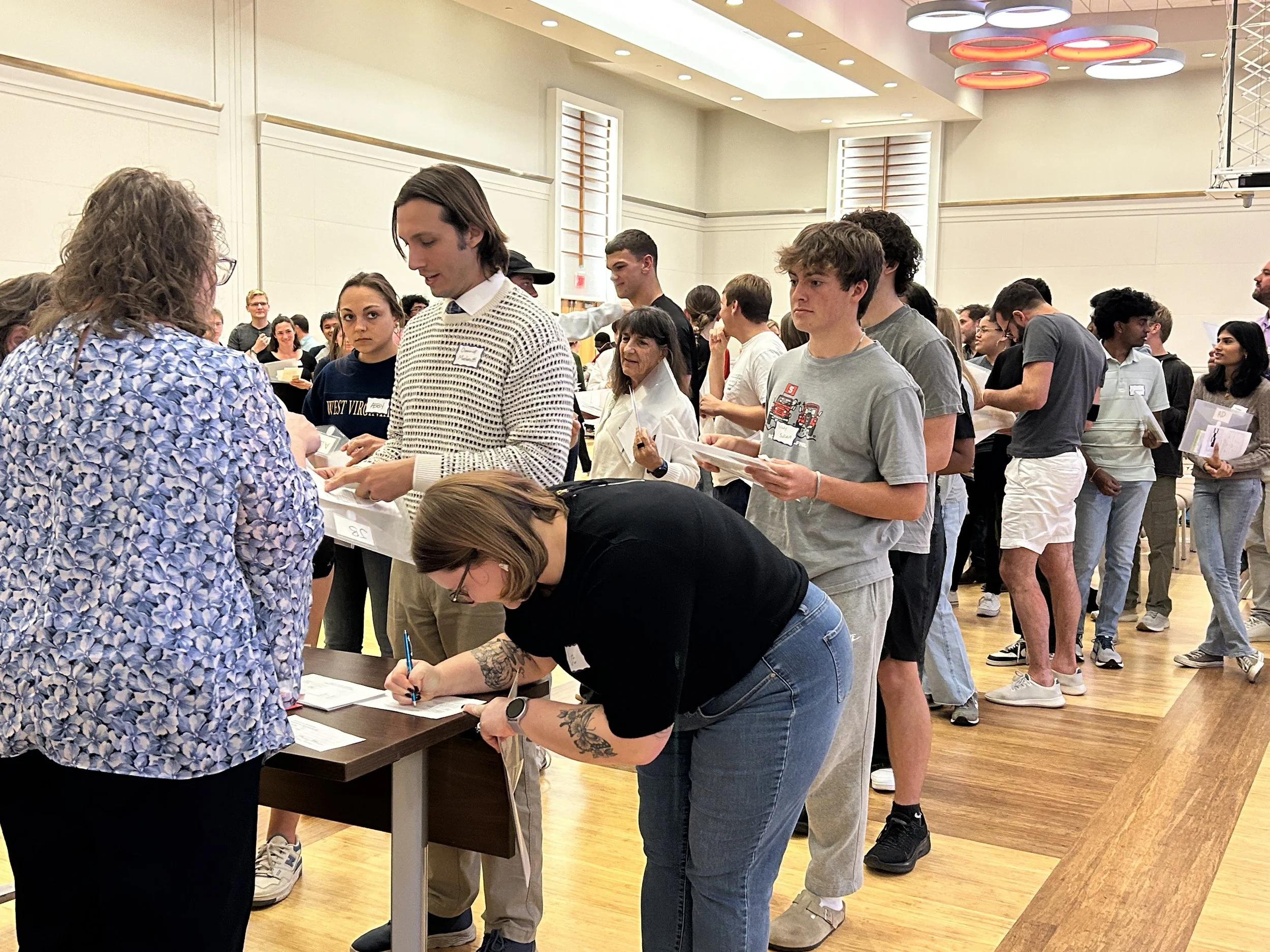
More than 75 participants were given an envelope with all the information needed for the next hour. Inside mine was an identity card and such information as to whether or not I was a vet, on disability, etc. Additional things that were or could have been included in varying quantities in my packet included cash coupons, bus passes, pawn cards, vouchers, paychecks, action cards, prescriptions, and IDs.
Brian Scott, founder and Executive Director of Our Journey and someone with lived experience in the criminal justice system, emceed the event, injecting humor as well as providing practical information about the challenges returning citizens face. The invitation was extended by Alberto De Simoni, NCSU teaching professor. who organized the event with a group of faculty, staff, and students.
We had four 15-minute back-to-back sessions, each one representing a week, to move between 13 booths, and complete the tasks that we were assigned. To start, however, we needed an ID card. If we didn’t have one, we had to proceed directly to the DMV station, which required transportation to get there and then money to secure the identity tag.
In my case, I had three bus tickets, but not enough money to pay for my ID card, so I had to use my pawn coupon. Eventually I ended up getting my ID but the line was so long that I had no time to complete the other tasks required for that ‘week.’ Like everyone else, I was under the threat of going to ‘jail’ if I wasn’t back in my seat when the 15-minute bell sounded.
Other booths, not all of which I had on my list to visit, included a bank, a counseling center, rent and transportation, social services, loan and pawn shop, probation office, plasma center (where you could ‘sell’ your blood to get money), employment, medical (where I had to ‘take’ a drug test which I failed, according to the random card I picked), house of worship, courthouse and career center.
Although I was one of the lucky ones that had housing, there were those who did not and could not pay their rent – they had to carry their chairs around with them during the simulation. Even a seven-month pregnant woman! There were a few people who tried to steal money, others nabbing IDs and some pawning ticket items. While a few of the thieves got away with their crimes, many were caught by “Sheriff De Simoni” and taken to jail.
Those behind the booths granting or denying our requests were brilliant at their roles. A few went out of their way to help us, while others yawned and appeared at best disinterested in our troubles. One man even displayed an ‘out to lunch’ sign despite a growing line in front of him, making it impossible to complete a given task.
I avoided jail, but that was just luck. During week one and two I completed just one out of four+ tasks. However on week three I was able to complete a few more tasks because I enlisted the help of a roving ‘advocate.’ Not everyone was so lucky; only a handful of people were able to get all of their tasks completed by the end of the ‘month.’
The simulation was both enlightening, discouraging, and powerful. It highlighted the herculean challenges returning citizens face and how a little bit of help and kindness from the community could ease their stress and possibly help them succeed.
I found the entire experience so impactful that E4C is already working on bringing Brian, Alberto and their team to Miami early next year to offer a few ReEntry Simulations at our local universities. We will need lots of volunteers – both as participants and to man the booths, so stay tuned for more information about this in future newsletters.